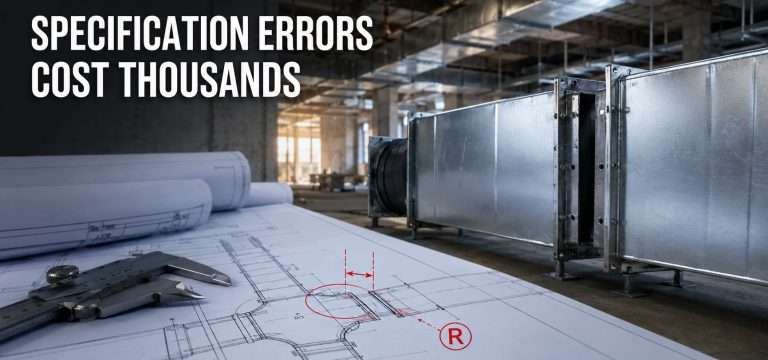
In the world of HVAC system design, the focus often leans heavily on efficiency, energy consumption, and airflow performance. However, one critical aspect frequently overlooked until it becomes a problem is noise. The relationship between airflow, pressure drop, and noise is complex—but understanding how these elements interact is essential to achieving a well-balanced and comfortable indoor environment.
The Basics in HVAC: Airflow and Pressure Drop
Airflow refers to the volume of air moved through an HVAC system, typically measured in cubic metres per hour (m³/h) or litres per second (L/s). Proper airflow is essential to ensure adequate ventilation, heating, and cooling throughout a building.
However, air doesn’t move freely without resistance. As air flows through ducts, filters, coils, dampers, and other components, it encounters pressure drops—reductions in air pressure due to friction and obstructions. Engineers aim to minimise unnecessary pressure drop because it increases the energy required to move air through the system, leading to higher operating costs and potential strain on fans.
HVAC – Where Noise Comes In
Unfortunately, where there’s airflow and resistance, there’s also noise. HVAC noise typically originates from three main sources:
- Mechanical noise from fans and motors,
- Airborne noise carried through ductwork, and
- Regenerated noise, created when air passes through restrictions like dampers, grilles, or undersized ductwork.
When airflow is forced through a tight space at high velocity, turbulence increases—and with it, noise. This is especially noticeable in systems with high pressure drop. So, while boosting fan power might restore airflow after a pressure drop, it often comes at the cost of acoustic comfort.
The Delicate Balance: Efficiency vs Comfort in HVAC
This is where the balancing act comes in. Increasing airflow improves ventilation, but it can lead to higher pressure drops and therefore more noise. Similarly, reducing noise by slowing airflow can compromise ventilation and indoor air quality.
So how do engineers, HVAC contractors, and architects strike the right balance?
Practical Solutions for Balancing the HVAC System
- Use Sound Attenuators Wisely
Sound attenuators (or silencers) are specially designed to reduce noise without severely impacting airflow. Selecting the correct attenuator for your system requires a clear understanding of the desired insertion loss (noise reduction), allowable pressure drop, and space constraints. At Attenu-tec, we manufacture attenuators designed to achieve high acoustic performance with minimal airflow resistance. - Avoid Excessive Air Velocities
High air velocities can lead to whistling, vibration, and rumbling noises. Designing ductwork with appropriate sizing, avoiding sharp bends, and using gradual transitions helps reduce turbulence and noise. - Balance Fan Selection with Acoustic Considerations
Oversized fans may provide more airflow but often generate excessive noise. Variable speed fans, when properly controlled, can optimise airflow while maintaining quieter operation. - Specify Low-Pressure Drop Components
Efficient filters, coils, and grilles can reduce resistance, allowing for smoother airflow and less mechanical noise. Even small design changes—like using curved vanes in ductwork—can reduce pressure drops and noise. - Consider Acoustic Zoning
Design the system to locate noisier components away from noise-sensitive areas like offices, classrooms, or patient rooms. Duct liners and lagging can also help contain sound within certain parts of the system.
Why It Matters
Excessive noise in buildings doesn’t just cause irritation—it affects productivity, comfort, concentration, and even health. In commercial settings, HVAC noise can interfere with speech intelligibility in meeting rooms. In healthcare facilities, it can disrupt sleep and recovery. And in residential spaces, it simply detracts from the quality of life.
By taking an integrated approach that considers airflow, pressure drop, and acoustics from the beginning of the design process, it’s possible to build systems that are both energy-efficient and quiet.
At Attenu-tec, we aim to deliver high-performance sound attenuation solutions that don’t compromise on airflow. For help selecting the right attenuator for your next project, feel free to reach out.