How Modern Attenuators Optimise Airflow and Acoustic Performance in SA
For South African contractors and architects, balancing ventilation efficiency with noise control has long felt like a zero-sum game. The persistent myth? “Installing sound attenuators means sacrificing airflow.” This misconception forces project teams into compromised designs—over-sizing ductwork to counter static pressure loss, inflating energy costs, or worse, bypassing noise control altogether. But with modern attenuator engineering, this trade-off is obsolete. Today’s solutions deliver optimal airflow and silence, turning regulatory compliance into operational advantage. Let’s dismantle the myths clouding SA’s builds.
The Stubborn Myth: Why “Airflow Sacrifice” Persists
Traditional attenuators used dense, labyrinthine baffles to trap sound waves. These designs did create turbulent airflow, causing high static pressure losses (often 100–150 Pa). For engineers fighting South Africa’s heat, dust, and humidity, this posed real risks:
- Energy penalties: Compensating for pressure drops increased fan power by 15–25%—a crippling cost amid power cuts and rising tariffs.
- Compliance failures: Inadequate airflow breached SANS 10400-O (ventilation) and Part O (noise), inviting legal liability.
- Durability issues: Poorly designed attenuators accumulated dust, further restricting airflow in high-pollution zones like Gauteng’s industrial belts.
Yet technology has moved on. The myth survives only because outdated specs linger in procurement libraries.
Engineering Breakthroughs: No Compromise Needed
Modern attenuators leverage aerodynamic science to shatter the airflow-noise dichotomy.
Key innovations:
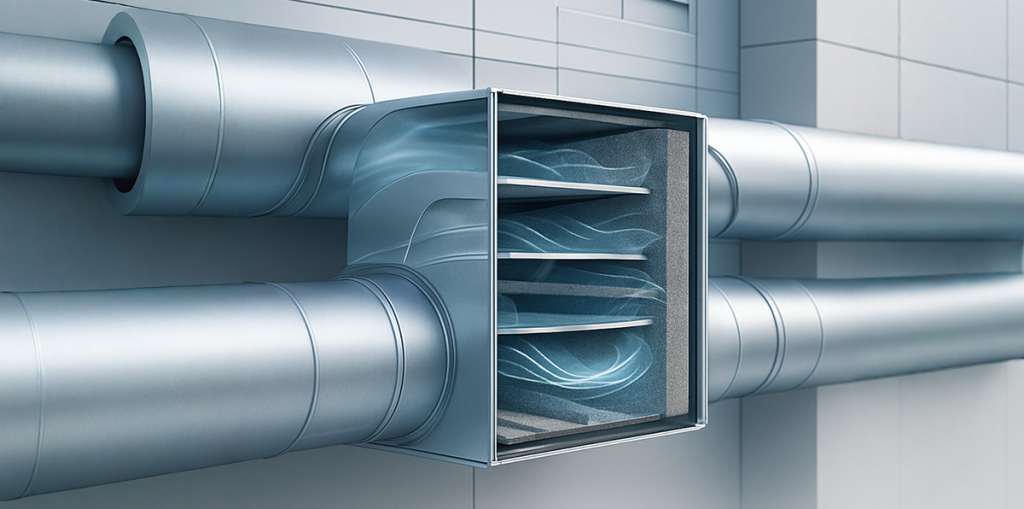
- Aerodynamic Vane Design: Gone are the boxy baffles. Attenu-tec’s curved, helical vanes guide air smoothly – like an aircraft wing – reducing turbulence. Tests show static pressure losses below 30 Pa, outperforming conventional models.
- Computational Fluid Dynamics (CFD) Optimisation: South African labs now use CFD modelling to simulate airflow paths specific to local conditions (e.g., Highveld dust loads or coastal salt air). By tailoring vane spacing and angles, engineers maintain >99% airflow efficiency even at critical attenuation frequencies (63-4000 Hz).
- Low-Drag Acoustic Media: Advanced micro-perforated absorbers (e.g., fibreglass-free mineral wool) resist clogging while damping noise. In Durban’s humid coastal sites, these materials prevent mould and maintain permeability for 20+ years.
SA-Specific Gains: Where Efficiency Matters Most
- Energy Savings Amid Power Cuts: A Johannesburg hospital retrofit cut fan energy use after installing modern attenuators. With generators running daily, efficient airflow reduces diesel consumption during outages.
- Compliance Without Over-Engineering: SANS 10400 mandates strict ventilation rates (e.g., 10 l/s per person in offices). Older attenuators forced architects to oversize ducts by 20%, stealing ceiling space. Modern units achieve compliance in standard ducts, protecting floor plans.
- Dust & Humidity Resilience: In mining-sector projects (Limpopo/North West), anti-clogging vanes reduced maintenance shutdowns by 40%. Coastal hotels (e.g., Camps Bay) use corrosion-resistant aluminium cores to avoid salt-induced degradation.
The Way Forward: Integrating Airflow and Acoustics from Day One
For architects and project managers:
- Specify Smart: Demand CFD-modelled attenuators with Pa loss metrics.
- Lifecycle Math: Calculate 10-year energy savings (not just capex). Attenu-tec’s units repay their cost in 2–3 years via efficiency gains.
- Future-Proof: Opt for corrosion/dust-resistant builds—SA’s climate demands it.
Efficiency Is Engineered, Not Sacrificed
South Africa’s built environment needs no more compromises. Modern attenuators are precision tools that harmonise ventilation and silence, turning regulatory hurdles into value. The question isn’t “Can we afford attenuation?” but “Can we afford outdated acoustics?”