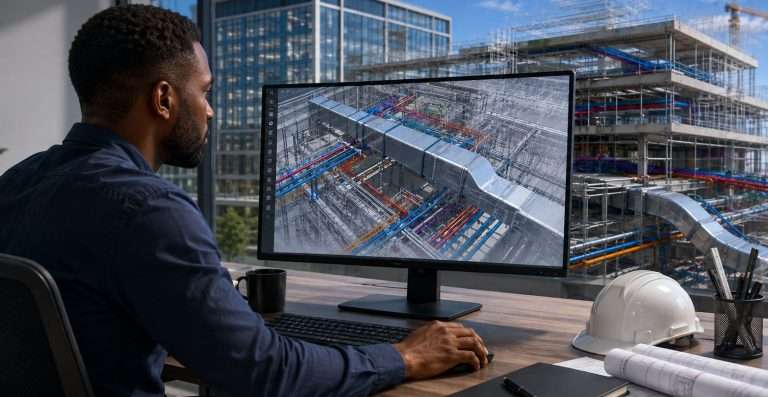
Smart buildings are no longer a vision of the future – they’re already here. Across South Africa, modern developments are integrating sensors, automation, and AI-driven systems to create buildings that respond intelligently to occupants’ needs.
But there’s one element of building performance that’s often overlooked in the rush toward smart technology: acoustics.
Noise control might not seem as cutting-edge as energy monitoring or automated lighting, yet it plays a vital role in how people experience and interact with spaces. The next generation of smart buildings won’t just adjust temperature or lighting – they’ll actively manage sound to improve comfort, productivity, and wellbeing.
At Attenu-Tec, we believe acoustics are a key part of this evolution. Here’s why.
The Human Side of Smart Buildings
A truly smart building isn’t just efficient – it’s human-centred. It adapts to the people inside it.
Research consistently shows that acoustic comfort affects concentration, stress levels, and even health. Excessive background noise can increase fatigue, reduce productivity, and lower satisfaction among occupants. In hospitals, it can slow recovery; in schools, it can affect learning outcomes.
As more South African developers aim for Green Star or WELL certification, acoustic performance is moving higher up the agenda. After all, what’s the use of a “smart” space if it’s unpleasant to be in?
Smart buildings that monitor and regulate temperature, light, and air quality will increasingly integrate acoustic management into their control systems — using sensors, adaptive materials, and intelligent HVAC design to maintain consistent comfort levels.
The Role of HVAC Acoustics in Intelligent Design
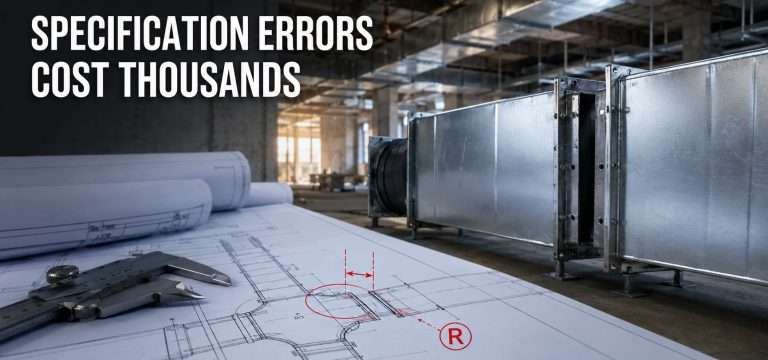
HVAC systems are among the most significant contributors to background noise in buildings. Fan vibration, duct turbulence, and mechanical rumble all add up to what we often call “building noise.”
In a smart environment, HVAC performance and acoustics are intertwined. For example:
- Adaptive Fan Speeds: Smart systems automatically adjust airflow based on occupancy or air quality. But without good attenuation, these fluctuations can create audible noise variations that draw attention to system changes.
- Data-Driven Comfort: Intelligent systems track sound levels as part of the environmental data they collect. Sound attenuators that maintain consistent acoustic conditions help these systems work more effectively.
- Energy Efficiency: Smart design isn’t just about sensors — it’s about system harmony. A well-designed attenuator reduces pressure drop, allowing HVAC systems to run more quietly and more efficiently.
In this way, acoustics support both comfort and sustainability, making them an essential part of any intelligent building system.
Acoustic Intelligence: The Next Frontier
Imagine a building that listens as well as it breathes.
Emerging technologies are already making this possible. Acoustic sensors can now measure ambient sound and identify sources of noise in real time. AI algorithms can distinguish between normal background hum and mechanical anomalies — detecting failing equipment before it causes disruption.
In the near future, smart systems could automatically adjust airflow or activate dampers to counteract rising noise levels, maintaining equilibrium without human input.
In this context, sound attenuation isn’t a static solution — it’s part of a responsive ecosystem that adapts to how a building behaves throughout the day.
Designing for the South African Context
South Africa’s climate and energy realities add another layer of complexity. Frequent temperature fluctuations, power failures, and generator noise all contribute to acoustic challenges that can’t be ignored in intelligent design.
Attenu-Tec designs attenuators specifically for these conditions — balancing noise control with energy efficiency to ensure HVAC systems perform optimally, even under variable load. Our locally manufactured solutions help architects, engineers, and contractors deliver buildings that are not only smart but resilient, sustainable, and comfortable.
By integrating acoustic solutions early in the design phase, project teams can prevent problems before they arise — avoiding costly retrofits and ensuring that intelligent systems perform as intended.
The Future Sounds Better
As building technologies evolve, the smartest designs will be those that prioritise the human experience. Acoustics bridge the gap between digital intelligence and physical comfort — turning data-driven spaces into truly liveable environments.
Whether it’s an office that adapts to changing occupancy, a hospital that protects patient rest, or a retail space that encourages calm, sound will be central to how we experience the smart buildings of tomorrow.