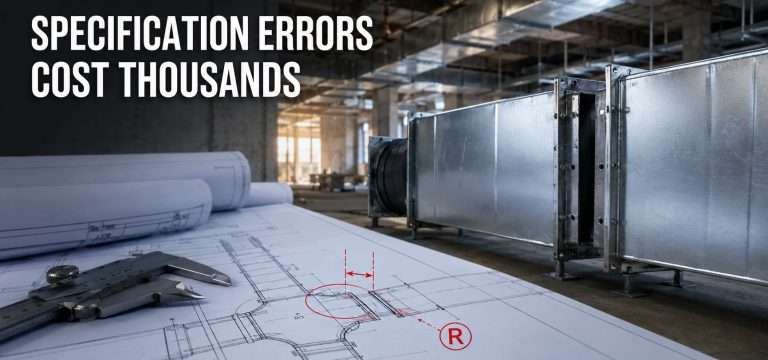
HVAC systems, while essential for maintaining comfortable indoor environments, can often generate significant noise pollution. To mitigate this issue, sound attenuators are employed to decrease noise levels and improve the general acoustic performance of HVAC systems.
Understanding Sound Attenuators
Sound attenuators are specialised devices designed to reduce the transmission of sound waves through ducts and other components of HVAC systems. They work by absorbing, reflecting, or deflecting sound energy, thereby limiting its propagation.
Types of HVAC Attenuators
- Circular Attenuators Circular attenuators are commonly used in round ductwork systems. They are typically cylindrical in shape and are inserted directly into the ductwork. Circular attenuators are effective at reducing high-frequency noise and are often used in residential and commercial applications.
- Tube Attenuators Tube attenuators are designed for use in rectangular ductwork systems. They are usually a rectangle in shape and are installed within the ductwork to reduce noise transmission. Tube attenuators are effective at reducing both high-frequency and low-frequency noise, making them suitable for a wide range of applications.
- Rectangular Attenuators Rectangular attenuators are another type of attenuator used in rectangular ductwork systems. They are similar to tube attenuators but often have a more complex internal design to provide enhanced noise reduction performance. Rectangular attenuators are particularly effective at reducing low-frequency noise.
Factors to Consider When Selecting an Attenuator
When selecting an attenuator for your HVAC system, several factors should be considered:
- Noise Frequency: The frequency range of the noise to be attenuated will determine the type of attenuator required.
- Duct Size and Shape: The size and shape of the ductwork will influence the size and configuration of the attenuator.
- Pressure Drop: Attenuators can introduce additional pressure drop to the HVAC system, which can impact system performance. It is essential to select an attenuator that minimizes pressure drop.
- Acoustic Performance: The desired level of noise reduction will determine the specific acoustic performance requirements of the attenuator.
Attenu-Tec: A Leading Provider of HVAC Attenuators
Attenu-Tec is a renowned supplier of high-quality HVAC attenuators in South Africa. They offer a wide range of products, including circular, tube, and rectangular attenuators, to meet the diverse needs of their customers.
Attenu-Tec’s attenuators are designed to:
- Reduce noise levels: Attenuate noise from fans, motors, and other components.
- Improve indoor comfort: Create quieter and more pleasant indoor environments.
- Enhance system performance: Minimize pressure drop and maintain optimal airflow.
- Meet regulatory standards: Comply with local noise regulations and building codes.
By partnering with Attenu-Tec, you can ensure that your HVAC system operates efficiently and quietly.
In conclusion, sound attenuators are essential components of modern HVAC systems. By understanding the different types of attenuators and their applications, you can select the right solution to reduce noise and improve the overall performance of your HVAC system.