In South Africa, our educational institutions, from bustling urban primary schools to sprawling university campuses and dedicated libraries, are the crucibles where futures are forged. These are environments where concentration, clear communication, and focused learning are paramount. Yet, an often-overlooked environmental factor can subtly but significantly undermine these critical activities: noise. While the lively chatter of students is a welcome sound, the persistent hum, drone, or even disruptive rumble of a poorly attenuated Heating, Ventilation, and Air Conditioning (HVAC) system can create an acoustic landscape far from conducive to effective teaching and learning. This is precisely why investing in smart HVAC sound attenuation is not merely a modern luxury, but a vital necessity for creating truly calmer and more productive environments in South African education.
The impact of excessive noise on learning is well-researched and globally acknowledged. In a classroom, background noise makes it harder for students to hear and understand their teacher, especially those with hearing impairments, learning difficulties, or who are learning in a second language – a significant portion of South Africa’s diverse student population. When children expend more cognitive effort simply trying to decipher speech amidst the noise, fewer resources are left for actual comprehension, memory, and critical thinking. This can lead to frustration, reduced academic performance, and even behavioural issues as students struggle to cope with the auditory overload.
Impact of Smart HVAC
For teachers, the challenges are equally profound. Constantly raising their voices to be heard over background noise can lead to vocal strain, fatigue, and a reduced ability to engage students effectively. Their primary tool for instruction – their voice – is compromised, impacting the quality of education delivered. A quieter classroom, facilitated by effective Smart HVAC sound attenuation, allows teachers to maintain a natural speaking volume, preserving their vocal health and enabling clearer, more effective communication.
South African educational facilities, particularly many older public schools, face unique acoustic challenges. Many are naturally ventilated, relying on open windows, which, while beneficial for airflow and preventing disease transmission (a crucial consideration in South Africa given challenges like TB), simultaneously usher in external noise from traffic, playgrounds, and adjacent areas. Even in modern buildings with sealed envelopes and reliance on HVAC, the internal noise generated by these systems, if not properly managed, can be a major disruptor. Research in South Africa has indicated that background noise levels in many classrooms far exceed recommended standards, impacting the learning environment.
Smart HVAC systems are indispensable for maintaining thermal comfort and air quality in our diverse climate – from the sweltering summers in Limpopo to the chilly winters in the Free State. However, the mechanical operation of fans, air handling units, and the movement of air through ductwork inherently generates noise. Without strategic intervention, this noise travels through the ventilation system, permeating classrooms, lecture halls, laboratories, libraries, and administrative offices.
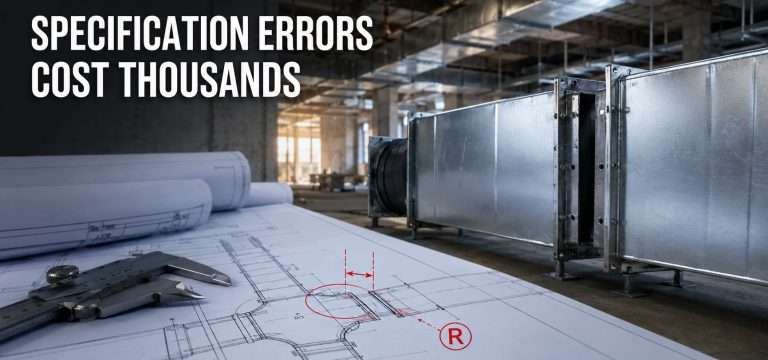
This is where Smart HVAC sound attenuators become the unsung heroes. These specialised devices are designed to absorb and reduce noise generated by HVAC components without impeding airflow. They are typically installed within the ductwork, featuring internal baffles and sound-absorbing materials that effectively dissipate sound waves. By integrating these attenuators into the HVAC design, educational institutions can ensure optimal indoor temperatures and air quality, free from distracting mechanical noise.
Consider a university lecture theatre on a hot Bloemfontein afternoon. A powerful HVAC system is necessary to keep the students comfortable and alert. Without sound attenuation, the hum of the system could make it difficult for students at the back to hear the lecturer, leading to disengagement. With properly installed attenuators, the air circulates quietly, allowing for clear delivery of information and improved student focus. Similarly, in a school library in Gqeberha, where silence is golden, a noisy ventilation system would be counterproductive. Smart HVAC sound attenuators enable these spaces to maintain their intended calm.
Beyond the direct benefits to learning and teaching, a calmer acoustic environment also contributes to the overall well-being and positive atmosphere of the institution. Reduced noise can lower stress levels for both students and staff, fostering a more positive and productive learning community. It signals a commitment to providing the best possible conditions for educational success.
For school governing bodies, university management, and facilities planners across South Africa, investing in smart HVAC sound attenuators should be a priority. While initial costs might be a consideration, the long-term benefits of improved academic outcomes, enhanced staff retention, and a more positive institutional reputation far outweigh the expenditure. It’s about creating spaces where every student has the best possible chance to hear, learn, and thrive, and where every educator can teach effectively without battling the background. By embracing smart HVAC sound attenuation, South African educational institutions can truly create calmer environments, allowing the whispers of knowledge to be heard above all else.